Monday, September 6, 2010

Petition to free Sakineh from death by stoning receives over 300,000 signatures, and counting

Image: FreeSakineh.org
For about five years, Sakineh Mohammadi Ashtiani has been imprisoned and under penalty of painful death by stoning, for charges of 'having illicit relationships,' adultury, and the murder of her husband. Her initial confession of having been involved in an affair with a man was recanted, as she was being whipped at the time, giving her confession under duress. No witnesses came forward to support the accusations against Sakineh, and her children have rallied behind her, risking their own safety.

Worldwide, there is a great outcry against the unjust treatment of Sakineh by the Iranian government; human rights groups, world leaders, and people from all walks of life are joining in the protest. As I sit here writing, I see dozens of signatures added to the tally on http://freesakineh.org/. You can join by signing the petition too, and by sharing Sakineh's story with others.

Sunday, September 5, 2010

New hope for liver disease patients: scientists grow new liver cells in the lab for the first time

Image: Nature.com
For the first time after 40 years of trying, scientists are able to grow liver cells by reprogramming skin cells. Diagnoses of liver disease are especially frightening for patients, since it is the fifth largest cause of death in the US and even higher in other countries, and there is such a shortage of donor livers available for transplant. With this breakthrough, scientists are closer than ever to finding new, effective treatments for patients.

The results of this clinical study were published September 1st, 2010, in the Journal of Clinical Investigation.

Saturday, August 28, 2010

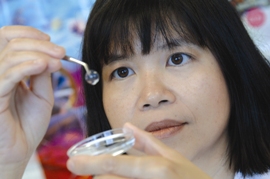
Seeing the world with new eyes: Biosynthetic corneas restore vision in humans

Image: OHRI
(from Ottawa Hospital Research Institute)


A new study from researchers in Canada and Sweden has shown that biosynthetic corneas can help regenerate and repair damaged eye tissue and improve vision in humans. The results, from an early phase clinical trial with 10 patients, are published in the August 25th, 2010 issue of Science Translational Medicine.

“This study is important because it is the first to show that an artificially fabricated cornea can integrate with the human eye and stimulate regeneration,” said senior author Dr. May Griffith of the Ottawa Hospital Research Institute, the University of Ottawa and Linköping University. “With further research, this approach could help restore sight to millions of people who are waiting for a donated human cornea for transplantation.”

The cornea is a thin transparent layer of collagen and cells that acts as a window into the eyeball. It must be completely transparent to allow the light to enter and it also helps with focus. Globally, diseases that lead to clouding of the cornea represent the most common cause of blindness. More than a decade ago, Dr. Griffith and her colleagues began developing biosynthetic corneas in Ottawa, Canada, using collagen produced in the laboratory and moulded into the shape of a cornea. After extensive laboratory testing, Dr. Griffith began collaborating with Dr. Per Fagerholm, an eye surgeon at Linköping University in Sweden, to provide the first-in-human experience with biosynthetic cornea implantation.

Together, they initiated a clinical trial in 10 Swedish patients with advanced keratoconus or central corneal scarring. Each patient underwent surgery on one eye to remove damaged corneal tissue and replace it with the biosynthetic cornea, made from synthetically cross-linked recombinant human collagen. Over two years of follow-up, the researchers observed that cells and nerves from the patients’ own corneas had grown into the implant, resulting in a “regenerated” cornea that resembled normal, healthy tissue. Patients did not experience any rejection reaction or require long-term immune suppression, which are serious side effects associated with the use of human donor tissue. The biosynthetic corneas also became sensitive to touch and began producing normal tears to keep the eye oxygenated. Vision improved in six of the ten patients, and after contact lens fitting, vision was comparable to conventional corneal transplantation with human donor tissue.

“We are very encouraged by these results and by the great potential of biosynthetic corneas,” said Dr. Fagerholm. “Further biomaterial enhancements and modifications to the surgical technique are ongoing, and new studies are being planned that will extend the use of the biosynthetic cornea to a wider range of sight-threatening conditions requiring transplantation.”

This research was supported by grants from the Canadian Stem Cell Network, the Swedish Research Council and County of Östergötland and a European Union Marie Curie International Fellowship. Initial work in developing the biosynthetic corneas was supported by the Natural Sciences and Engineering Research Council of Canada and the Canadian Institutes of Health Research. Recombinant human collagen type III used in formulating the biosynthetic corneas for the clinical study was provided by FibroGen, Inc., San Francisco, CA, U.S.A.

Dr. May Griffith is a Senior Scientist at the Ottawa Hospital Research Institute, Professor at the University of Ottawa (Faculty of Medicine) and Professor of Regenerative Medicine and Director of the Integrative Regenerative Medicine Centre at Linköping University. Dr. Per Fagerholm is a Professor of Ophthalmology at Linköping University. Dr. Neil Lagali is a senior lecturer at Linköping University. Other authors are listed in the paper.
About the Ottawa Hospital Research Institute
The Ottawa Hospital Research Institute (OHRI) is the research arm of The Ottawa Hospital and is an affiliated institute of the University of Ottawa, closely associated with the University’s Faculties of Medicine and Health Sciences. The OHRI includes more than 1,500 scientists, clinical investigators, graduate students, postdoctoral fellows and staff conducting research to improve the understanding, prevention, diagnosis and treatment of human disease. www.ohri.ca
About Linköping University
Linköping University is organized in four faculties on three campuses. With a student population of 26,000 and 3,500 employees it is one of the major universities in Sweden. The Faculty of Health Sciences is integrated with the University Hospital and covers a broad range of research fields. Within the emerging Integrative Regenerative Medicine Centre there is a close collaboration with physicists at the Institute of Technology. www.liu.se/om-liu/?l=en 


Friday, August 27, 2010

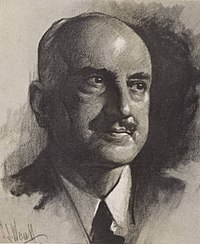
Image: Wikipedia
The aim of life is some way of living, as flexible and gentle as human nature; so that ambition may stoop to kindness, and philosophy to condor and humor. Neither prosperity nor empire nor heaven can be worth winning at the price of a virulent temper, bloody hands, an anguished spirit, and a vain hatred of the rest of the world. - George Santayana

Ethiopia Has Halved Malaria Deaths in Just Three Years (mirrored from The Global Fund)

Image: The Global Fund

The number of people who die from malaria has been halved in just three years through the distribution of nearly 20 million insecticide-treated bed nets and widespread use of antimalaria drugs.  The dramatic fall in deaths from a disease that kills one in four people in Ethiopia was made possible with Global Fund support and a small army of health workers.
Turnaround
In 2005, only two percent of households owned an insecticide-treated net and almost half the population had no access to any health care services at all. A plan to get nets out to farming families was floundering, partly because of the sheer number of nets required and partly because of the challenge of distributing them to remote areas.
Ethiopia’s minister of health, Tedros Ghebreyesus, describes the situation in simple terms, “We were in a mess.” He led a rapid assessment and galvanized the country into a proactive response to malaria. An arrangement was made with the Global Fund to speed up the flow of funds: money allocated for three years was released for spending in just one.
An Ambitious Program Exceeded All Previous Targets
In a scaled-up program, more bed nets were distributed than had previously been planned - 20 million insecticide treated nets to protect the most vulnerable, particularly women and children for whom malaria is more dangerous due to their bodies’ inability to fight the parasite.
Health Extension Workers
The idea is simple, broaden the outreach: train two high school graduates per village to act as health advisers. Thirty thousand young women have been mobilized to transfer health skills to the entire community. Their top-up training, disease test kits and drugs are paid for by the Global Fund.
Bringing Health Services to Rural Communities
Firehiwot takes basic health services to remote villages by making home visits on foot. She talks to housewives woman-to-woman, which makes it easier to address sensitive health issues. She advises pregnant women to sleep under a bed net and ensures they know how to obtain one.
Early detection of malaria is vital for effective treatment. Firehiwot is able to carry out tests for malaria on the spot thanks to a new lightweight disposable test kit. Paracheck is much easier to use than the traditional microscope. A drop of blood is absorbed by the dip stick and results are displayed in a window, similar to a pregnancy test.
If the malaria test result is positive, Firehiwot gives patients a three-day treatment of Coartem, which is based on a plant extract called artemesinin combined with other ingredients to prevent the development of drug resistance. Before Firehiwot’s visits, families ignored malaria symptoms because the nearest health post was too far to go for help. Now they don’t fall ill so often and are happier as a result.
Prevention is Better than Cure
Preventing people from getting sick not only improves their well-being, it is also better for their livelihood and reduces the strain on the health care system. Heath Minister Tedros explains the thinking behind the scheme: “It’s the knowledge gap that is exposing people to HIV, malaria, TB, diarrhea … so the health extension workers actually help them in changing their lifestyle. They can take the responsibility of helping themselves, because they can prevent diseases on their own.”
Putting health care in the hands of the community is a good way of ensuring people get healthy and stay healthy. Grassroots health care is not costly and its impact is massive because eliminating the risk of the disease means avoiding the expenses triggered by diagnosis, treatment and follow up.
Health Minister Tedros’ commitment to fighting malaria is inspiring the continent. As chair of the international Roll Back Malaria Partnership, he is using his country’s model to inspire others in the region. Strong leadership and commitment combined with financing from the Global Fund and assistance from development partners are driving the fight against disease in Ethiopia. The only country in Africa never to have been colonized has fought off invaders in the past and is now effectively fighting off malaria.

Wednesday, August 18, 2010

can a game of ultimate Frisbee be one little step towards making peace possible?

Image: Ultimate Peace
These young people have found a most practical way to have fun, find camaraderie, and foster understanding by coming together through sports. Ultimate Peace is a summer camp for Israeli and Palestinian kids to meet in a safe location and simply play together, as human beings; not enemies, not rivals.

For so long, it's been the accepted wisdom in much of the world that it's best to raise your kids in a sheltered environment, where they learn only the practices, doctrines, and political convictions of their own local or idealogical community, and spend their formative years spending time only with others who are more or less the same. Such kids as these at Ultimate Peace show us that maybe, there's a much better way to grow.

Friday, August 13, 2010

Chris Abani on ubuntu: "the only way for me to be human is for you to reflect my humanity back at me"

                                                                              
This amazing talk by Chris Abani of Nigeria, about how it takes countless acts of kindness to bring about lasting social change, and illustrates his point with moving stories, sometimes heroic, sometimes sweet, sometimes horrific.
http://www.ted.com/talks/lang/eng/chris_abani_on_the_stories_of_africa.html